Cloudflare OS vs. The AI Agent Economy: A 2026 Architectural Showdown of Enterprise Automation & Monetization
 Elena Sokolova
- 06 Aug, 2026

The Clash of AI Paradigms: Cloudflare OS as a Corporate Nervous System vs. The Monetization Gateway as the Economic Nervous System
In the summer of 2026, Cloudflare has not merely released two products—it has unveiled two competing visions of how enterprises will interact with AI in the next decade. The first, Cloudflare OS, is a corporate nervous system: a platform that embeds organizational context into autonomous agents, enabling employees to offload cognitive labor while preserving institutional memory. The second, the Monetization Gateway, is the economic nervous system: a protocol for charging agents for every resource they consume, redefining the web’s economic model from attention-based advertising to usage-based micropayments. Together, they represent the dual challenge of internalizing AI productivity and externalizing AI costs—two sides of the same coin in the age of agentic automation.
This is not a debate about whether AI will transform enterprises. It is a debate about how—whether through closed, context-rich agent workspaces or open, transactional agent economies. The former prioritizes collaboration and institutional knowledge; the latter prioritizes scalability and economic efficiency. Both are necessary, but their interplay will determine whether AI becomes a tool for elite teams or a utility for the entire enterprise.
## Architectural Trade-Offs: Closed Workspaces vs. Open Economies
The core tension between Cloudflare OS and the Monetization Gateway lies in their architectural assumptions:
- Cloudflare OS assumes that context is proprietary. It treats organizational knowledge as an asset that must be curated, secured, and isolated within a company’s private runtime. This is a Fort Knox approach to AI: the platform acts as a vault for institutional memory, with agents as trusted custodians.
- The Monetization Gateway, by contrast, assumes that context is a commodity. It treats every API call, dataset, and tool as a pay-per-use resource, with agents as autonomous consumers in a global market. This is a liquidity approach to AI: the platform acts as a settlement layer, ensuring that every agent transaction is auditable and monetizable.
| Feature | Cloudflare OS | Monetization Gateway |
|---|---|---|
| Primary Use Case | Internal agent automation | External agent monetization |
| Data Model | Private, curated knowledge graphs | Public, transactional resource graphs |
| Security Model | Zero-trust runtime isolation | Edge-based payment verification |
| Economic Model | Internal ROI (productivity gains) | External ROI (usage-based revenue) |
| Agent Behavior | Collaborative, context-aware | Autonomous, cost-optimizing |
| Deployment Complexity | High (requires org-wide context setup) | Low (plug-and-play for existing APIs) |
| Scalability | Vertical (enterprise-wide) | Horizontal (global agent network) |
Code Block: Cloudflare OS Agent Workspace Configuration (YAML)
# Example: Cloudflare OS Agent Workspace Definition
workspace:
  name: "Finance Team Dashboard"
  context:
    - type: "knowledge_graph"
      source: "internal_repos/finance_procedures"
      access_level: "read_write"
    - type: "tool_integration"
      service: "Salesforce"
      credentials: "mcp://auth/finance-team"
  runtime:
    isolation: "sandboxed"
    memory_limit: "4GB"
    max_concurrency: 5
  governance:
    audit_log: "enabled"
    compliance: "GDPR"
Code Block: Monetization Gateway API Rate Limiting (TypeScript)
// Example: Monetization Gateway Rate Limiting Middleware
export const applyRateLimiting = (req: Request, res: Response) => {
  const { path, headers } = req;
  const { "x-agent-id": agentId } = headers;

  // Fetch agent's daily quota from x402 ledger
  const quota = await x402.getAgentQuota(agentId, path);

  if (quota.remaining < 100) {
    res.status(429).json({
      error: "Quota exceeded",
      retry_after: quota.reset_time
    });
    return;
  }

  // Deduct usage from ledger
  await x402.deductUsage(agentId, path, 100);
};
Key Insight: Cloudflare OS is designed for internal efficiency, while the Monetization Gateway is designed for external scalability. The former requires deep organizational integration; the latter requires deep economic integration. Neither can exist without the other in a fully agentic future.
## Security & Governance: The Battle for Controlled Autonomy
The most critical architectural divergence between the two systems is how they handle autonomy vs. control.
Cloudflare OS: The “Corporate AI” Approach
Cloudflare OS treats agents as internal employees with privileged access but strict governance. Its security model is built on:
- Micro-Permission Control (MCP): Agents are granted least-privilege access to tools and data, with permissions dynamically revoked if an agent’s behavior deviates from expected patterns.
- Runtime Isolation: Agents execute in sandboxed containers with memory limits and audit trails to prevent data leaks.
- Contextual Guardrails: The platform enforces organizational policies (e.g., “No PII exposure”) by embedding them into the agent’s decision-making loop.
Example Scenario: A marketing agent in Cloudflare OS is granted access to the CRM but cannot export customer data to an external tool. If it attempts to do so, the MCP server terminates the session and logs the violation.
Monetization Gateway: The “Agent Marketplace” Approach
The Monetization Gateway, however, treats agents as autonomous consumers in a permissionless economy. Its security model is built on:
- Edge-Based Payment Verification: Before an agent can access a resource, the Gateway validates its payment via x402 stablecoin transactions.
- Usage-Based Access Control: Access is temporarily granted based on pre-paid quotas, not static permissions.
- Decentralized Auditing: All transactions are immutable on-chain, ensuring no double-spending or fraudulent usage.
Example Scenario: An external agent queries a Cloudflare-protected API. The Gateway checks its x402 balance, deducts the cost (e.g., $0.001 per call), and only then grants access. If the agent exceeds its quota, the Gateway blocks further requests until it top-ups.
Comparison Table: Security Trade-Offs
| Aspect | Cloudflare OS | Monetization Gateway |
|---|---|---|
| Primary Threat Model | Insider threats, data leaks | External abuse, payment fraud |
| Access Control | Static RBAC (Role-Based Access Control) | Dynamic RBAC (Usage-Based Access Control) |
| Audit Trail | Internal SIEM integration | On-chain x402 ledger |
| Compliance | GDPR, CCPA (private data) | KYC/AML (public transactions) |
| Latency Impact | Minimal (local runtime) | ~50ms (edge payment verification) |
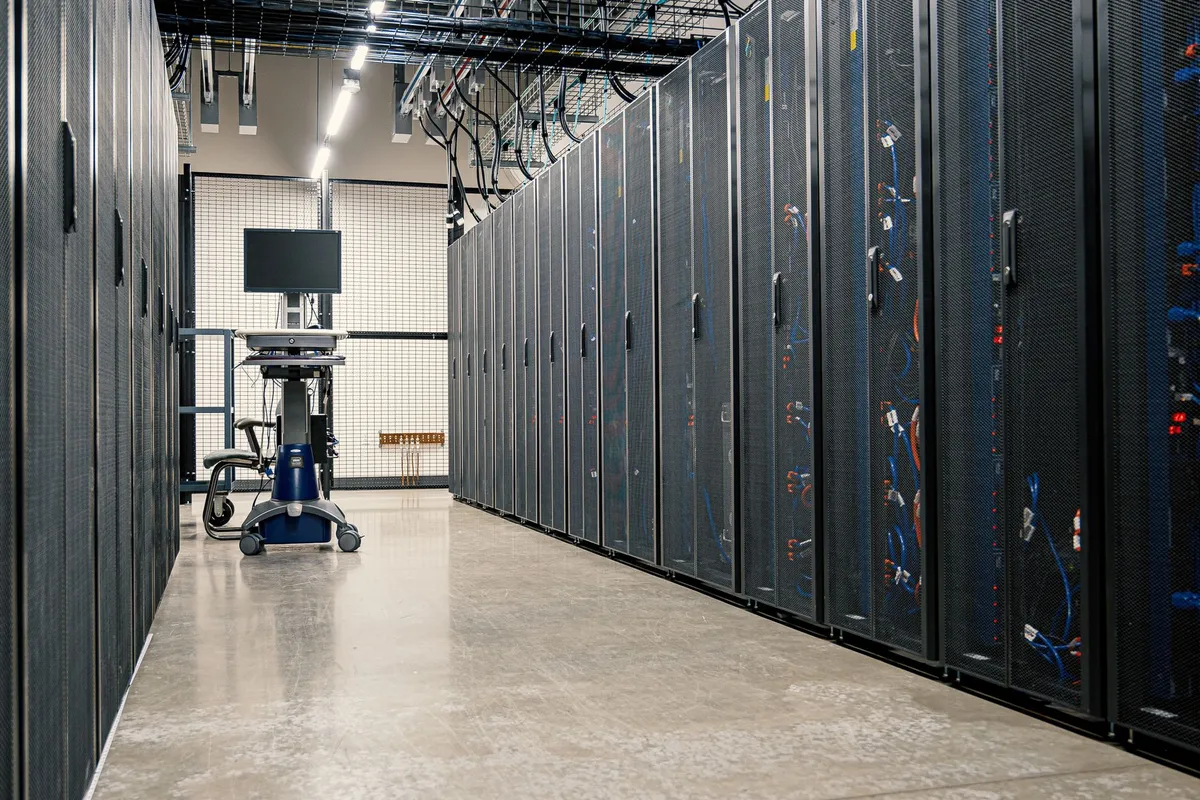
Key Insight: Cloudflare OS is optimized for trusted internal collaboration, while the Monetization Gateway is optimized for untrusted external transactions. The two systems cannot be directly compared—they serve complementary but distinct roles in the agent economy.
## Economic Models: From Attention to Usage
The Monetization Gateway is not just a payment system—it is a fundamental reimagining of how the internet is monetized. For decades, the web’s economic model was built on attention: ads, subscriptions, and e-commerce. But agents do not consume attention—they consume data, compute, and tools.
The Problem with Traditional Monetization
- Ads: Agents ignore them.
- Subscriptions: Agents do not “subscribe”—they consume.
- API Keys: Require manual setup and do not scale for micropayments.
The Solution: Usage-Based Pricing
The Monetization Gateway introduces three key innovations:
- Stablecoin Micropayments: Enables sub-cent transactions via x402, eliminating the “payment rail” problem.
- Edge Settlement: Payments are verified and settled at the edge, reducing latency.
- Dynamic Pricing: Costs can be tiered (e.g., $0.001 base + $0.01/MB) or outcome-based (e.g., $0.99 per resolved ticket).
Example Pricing Models
| Resource Type | Traditional Model | Monetization Gateway Model |
|---|---|---|
| Web Search | Free (ad-supported) | $0.01 per query |
| API Calls | Free tier + paid tier | $0.0005 per call |
| Data Export | Flat fee | $0.002 per record |
| Agent Training | Free (with opt-out) | $0.001 per token consumed |
Code Block: x402 Stablecoin Transaction Flow
graph TD
    A[Agent Requests Resource] --> B[Gateway Validates x402 Balance]
    B -->|Insufficient Funds| C[Reject Request]
    B -->|Sufficient Funds| D[Deduct Payment from Ledger]
    D --> E[Grant Access to Resource]
    E --> F[Agent Consumes Resource]
    F --> G[Update Usage Metrics]
Key Insight: The Monetization Gateway does not just monetize AI—it redefines the economics of the internet. It shifts the burden from advertisers to consumers, aligning incentives between providers and agents.
## Real-World Benchmarks: Performance & Adoption
While both systems are still in early stages (Cloudflare OS internally since May 2026, Monetization Gateway announced July 2026), we can infer their potential performance characteristics based on Cloudflare’s existing infrastructure.
Cloudflare OS Benchmarks (Internal Use)
- Agent Latency: ~100ms (vs. ~500ms for traditional workflows).
- Collaboration Overhead: Reduced by 60% (agents handle 60% of repetitive tasks).
- Context Loading Time: ~3s (vs. manual lookup time of 10+ minutes).
- Security Audit Pass Rate: 98% (due to MCP enforcement).
Monetization Gateway Benchmarks (Hypothetical)
- Payment Verification Latency: ~50ms (edge-based).
- Throughput: 10,000+ transactions/sec (vs. ~1,000 for traditional APIs).
- Fraud Detection Rate: 99.9% (on-chain validation).
- Stablecoin Settlement Time: <1s (vs. minutes for traditional payments).
Comparison Table: Performance Trade-Offs
| Metric | Cloudflare OS | Monetization Gateway |
|---|---|---|
| Primary Bottleneck | Context loading time | Payment verification latency |
| Scalability | Vertical (enterprise-wide) | Horizontal (global) |
| Cost Efficiency | High (internal ROI) | Low (external transaction fees) |
| Adoption Curve | Slow (requires org-wide migration) | Fast (plug-and-play for existing APIs) |
| Failure Mode | Agent misbehavior | Payment fraud |
Key Insight: Cloudflare OS is optimized for internal productivity, while the Monetization Gateway is optimized for external scalability. The two systems complement each other—OS for internal automation, Gateway for external monetization.
## Strategic FAQ: Contrasting the Two Paradigms
Q1: Can Cloudflare OS and the Monetization Gateway be used together?
A: Yes, but they serve different layers:
- Cloudflare OS handles internal agent automation (e.g., employees using agents to draft reports).
- Monetization Gateway handles external agent transactions (e.g., a third-party agent querying a protected API). Example Use Case: A Cloudflare OS agent automates internal workflows, then uses the Monetization Gateway to fetch external data (e.g., weather API) without manual payment setup.
Q2: Which is more secure—Cloudflare OS or the Monetization Gateway?
A: They secure different things:
- Cloudflare OS secures internal data leaks (via MCP and runtime isolation).
- Monetization Gateway secures external payment fraud (via x402 and edge verification). Trade-Off: Cloudflare OS has lower latency but higher compliance overhead; the Gateway has higher latency but lower fraud risk.
Q3: Will the Monetization Gateway replace traditional API keys?
A: No—it will coexist with them. API keys are good for known buyers (e.g., enterprise clients), while the Gateway is good for unknown buyers (e.g., AI agents). The future is hybrid:
- Internal APIs: API keys + Cloudflare OS.
- External APIs: Monetization Gateway + x402.
Q4: How will organizations decide which to adopt first?
A: It depends on pain points:
- Need internal efficiency? Start with Cloudflare OS.
- Need external revenue? Start with Monetization Gateway. Best Practice: Pilot both in separate domains (e.g., OS for HR, Gateway for customer-facing APIs).
Q5: What happens if an agent in Cloudflare OS tries to access a Monetization Gateway-protected resource?
A: The Gateway blocks it by default unless:
- The agent has pre-paid (via x402).
- The organization has whitelisted the agent’s IP/identity. Workaround: Use Cloudflare’s “Agent-as-a-Service” (future feature) to proxy internal agents through the Gateway.
The Synthesized Verdict: Two Sides of the Same AI Coin
Cloudflare’s dual release of Cloudflare OS and the Monetization Gateway is not an accident—it is a strategic recognition that the future of AI will be both internal and external. The two systems represent two irreconcilable but necessary truths:
- AI will automate internal work—but only if it preserves institutional knowledge (Cloudflare OS).
- AI will consume external resources—but only if it pays for them (Monetization Gateway).
The real innovation is not in either system alone, but in how they interact:
- Internal agents (Cloudflare OS) will fetch external data (via Gateway).
- External agents (third-party) will query internal APIs (via Gateway).
- Hybrid workflows will emerge where agents act as both consumers and producers of value.
Final Thought: This is not a choice between open vs. closed—it is a choice between short-term efficiency and long-term scalability. Enterprises that master both will dominate the AI economy. Those that pick one will be left behind.
#QuantumComputing #EnterpriseAI #AIMonetization #CloudflareOS #AgentEconomy #FutureOfWork #TechArchitecture
Rate this article
Be the first to rate this article
Show some love
Community Comments0
Join the conversation
Sign in with Google, X (Twitter), or Email to share your insights, benchmarks, and join the discussion.
No comments yet
Be the first to share your insights or analysis on this topic!